“Carbon and Its Compounds Full Concept Explanation with Solved Exercise and Last Five Years Solved Question Papers PDF Download by Dr. Juber Hawaldar (JH)” has been added to your cart. View cart
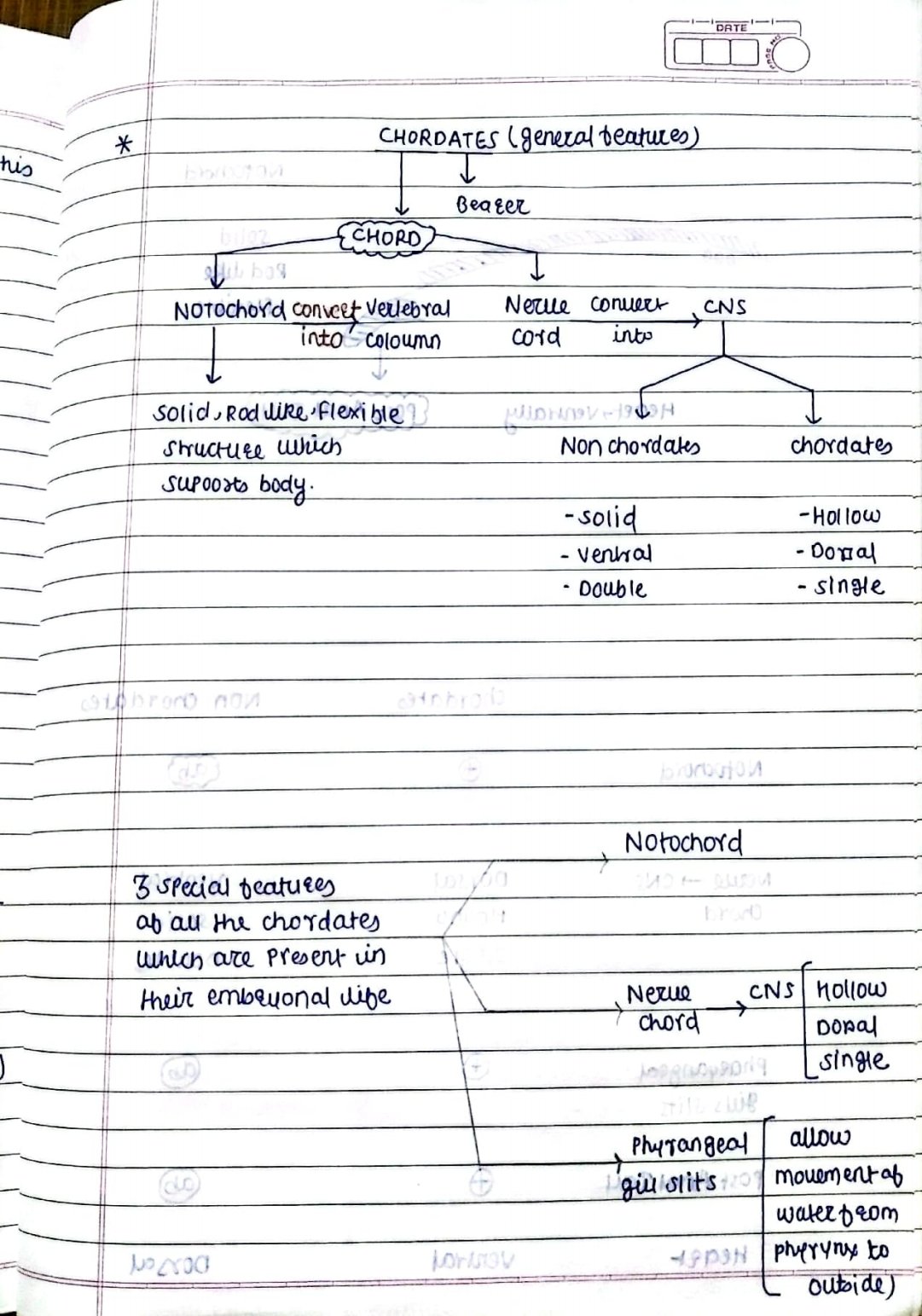
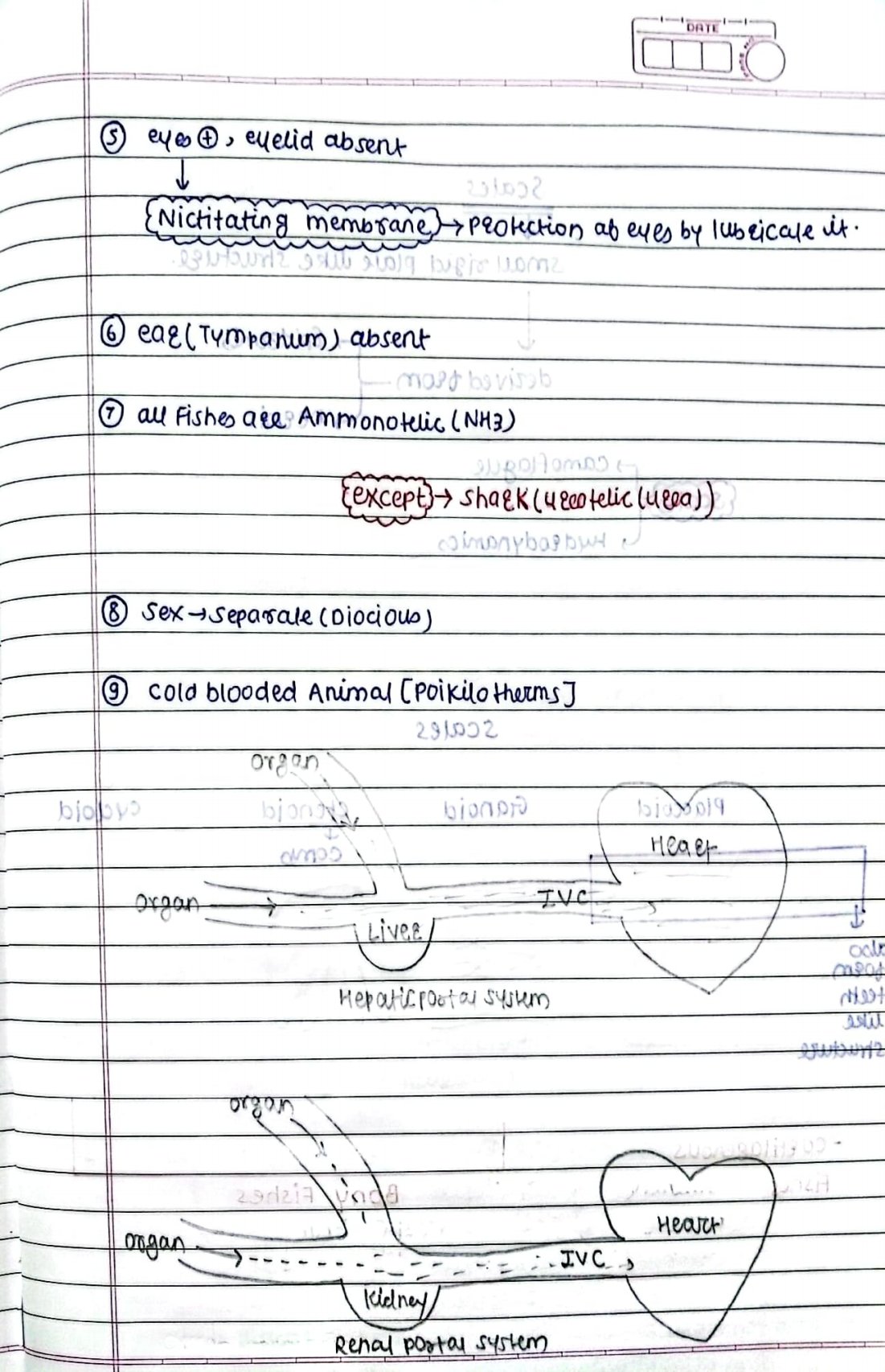
Definition: Chordates are animals possessing a notochord, a hollow dorsal nerve cord, pharyngeal slits, and a post-anal tail at some point in their life cycle.
Characteristics:
Notochord: A flexible, rod-shaped structure found in the embryonic stage of all chordates.
Dorsal Nerve Cord: Develops into the brain and spinal cord.
Pharyngeal Slits: Openings in the pharynx that develop into gill structures in aquatic chordates.
Post-Anal Tail: Extension of the body past the anal opening.
2. Classification of Chordates
Three Subphyla:
Urochordata (Tunicates):
Marine organisms.
Notochord present only in the larval stage.
Examples: Sea squirts.
Cephalochordata (Lancelets):
Marine organisms.
Notochord extends throughout life.
Examples: Amphioxus.
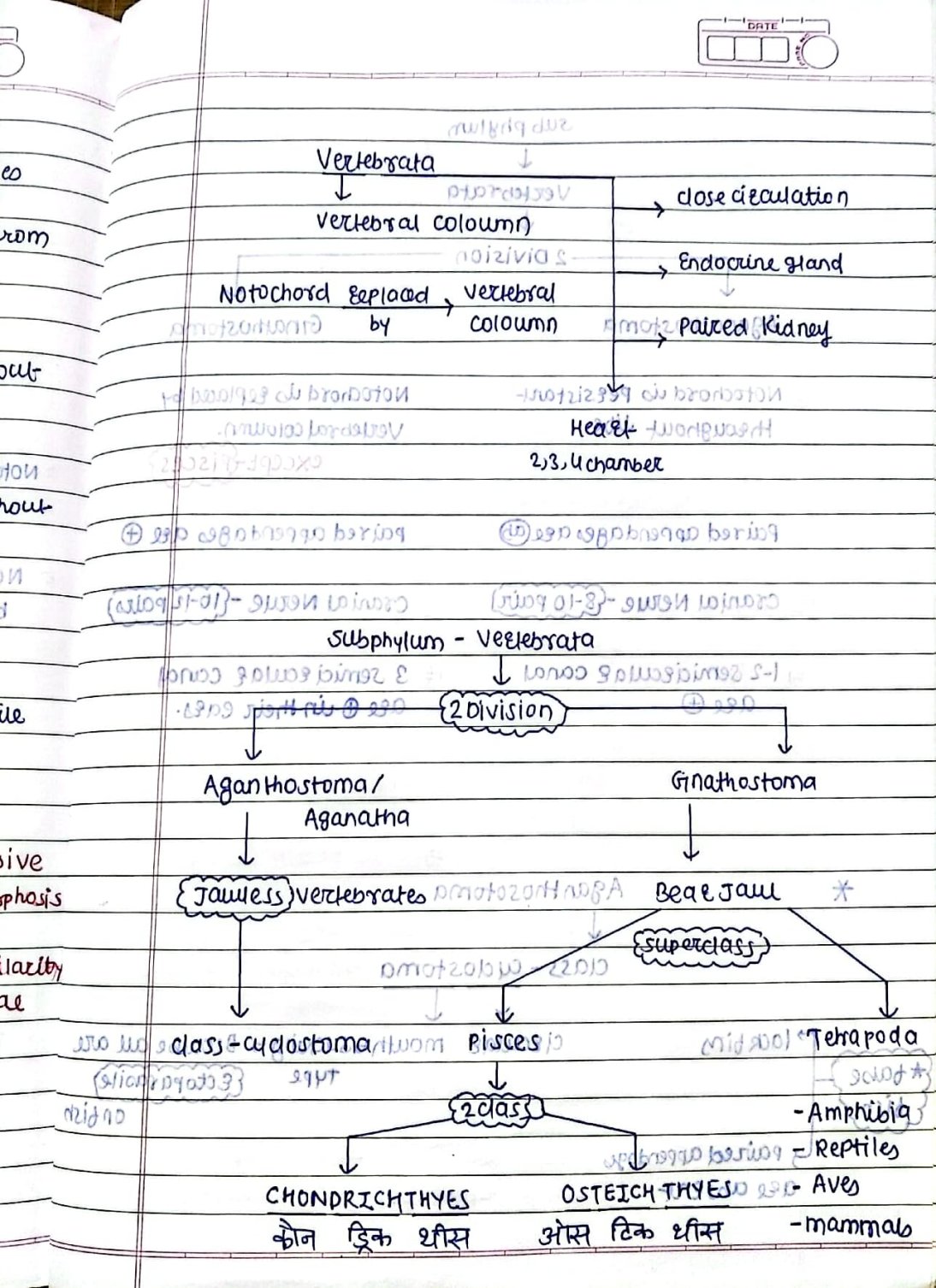
Vertebrata (Craniata):
Have a vertebral column.
Includes fishes, amphibians, reptiles, birds, and mammals.
3. Subphylum Vertebrata
Characteristics:
Endoskeleton: Made of cartilage or bone.
Complex Nervous System: Highly developed brain enclosed in a skull.
Closed Circulatory System: Heart with two, three, or four chambers.
Excretory System: Kidneys filter waste products from the blood.
4. Classes of Vertebrates
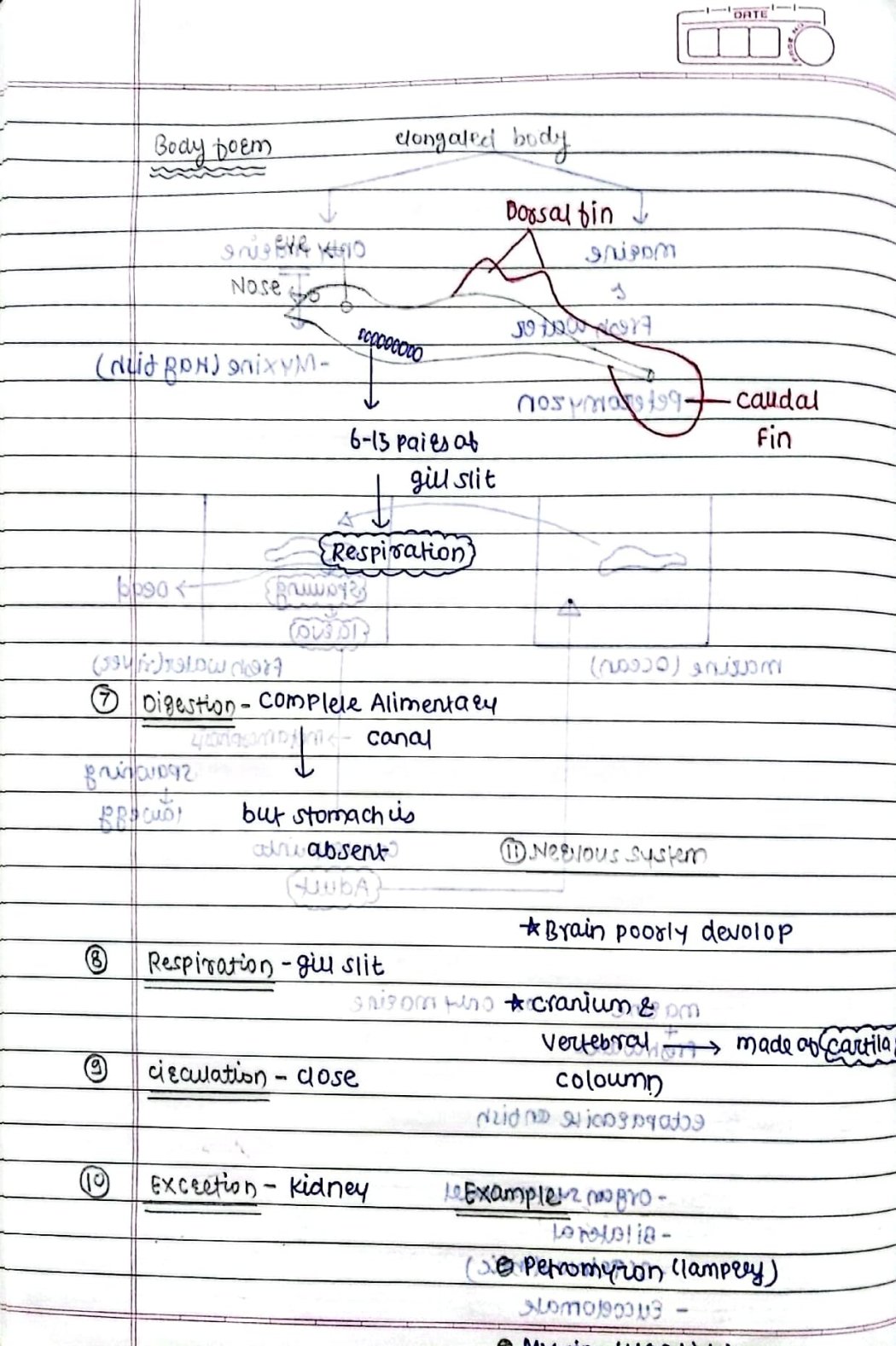
Agnatha (Jawless Fishes):
Lack jaws and paired fins.
Examples: Lampreys, hagfish.
Chondrichthyes (Cartilaginous Fishes):
Skeleton made of cartilage.
Examples: Sharks, rays.
Osteichthyes (Bony Fishes):
Skeleton made of bone.
Examples: Salmon, goldfish.
Amphibia (Amphibians):
Dual life: aquatic larval stage and terrestrial adult stage.
Examples: Frogs, salamanders.
Reptilia (Reptiles):
Scaly skin, lay shelled eggs.
Examples: Snakes, lizards, turtles.
Aves (Birds):
Feathers, beak, lay eggs, endothermic.
Examples: Eagles, sparrows.
Mammalia (Mammals):
Hair or fur, mammary glands, endothermic.
Examples: Humans, whales, elephants.
5. Adaptations in Chordates
Respiratory Adaptations:
Gills in fishes.
Lungs in amphibians, reptiles, birds, and mammals.
Reproductive Adaptations:
Oviparous (egg-laying) and viviparous (live-bearing) species.
Locomotory Adaptations:
Fins in fishes.
Limbs in amphibians, reptiles, birds, and mammals.
Sensory Adaptations:
Highly developed eyes, ears, and olfactory systems.
6. Examples and Economic Importance
Fishes: Important for food, sport, and aquarium trade.
Amphibians: Indicators of environmental health, pest control.
Reptiles: Control rodent populations, some are pets.
Birds: Pollination, seed dispersal, pest control, food.
Mammals: Domesticated animals for food, labor, and companionship.







 Maharshi Dayanand University | BCA 6th Semester OOPS Using Java Notes in English - Complete Printable Notes
  Class 10 भूगोल (Geography) All Chapters Notes PDF | Hindi Medium | Notes Drive
  BDS 1st year COMPLETE HISTOLOGY record book of anatomy PDF
  Carbon and Its Compounds Full Concept Explanation with Solved Exercise and Last Five Years Solved Question Papers PDF Download by Dr. Juber Hawaldar (JH)
Reviews
There are no reviews yet.